
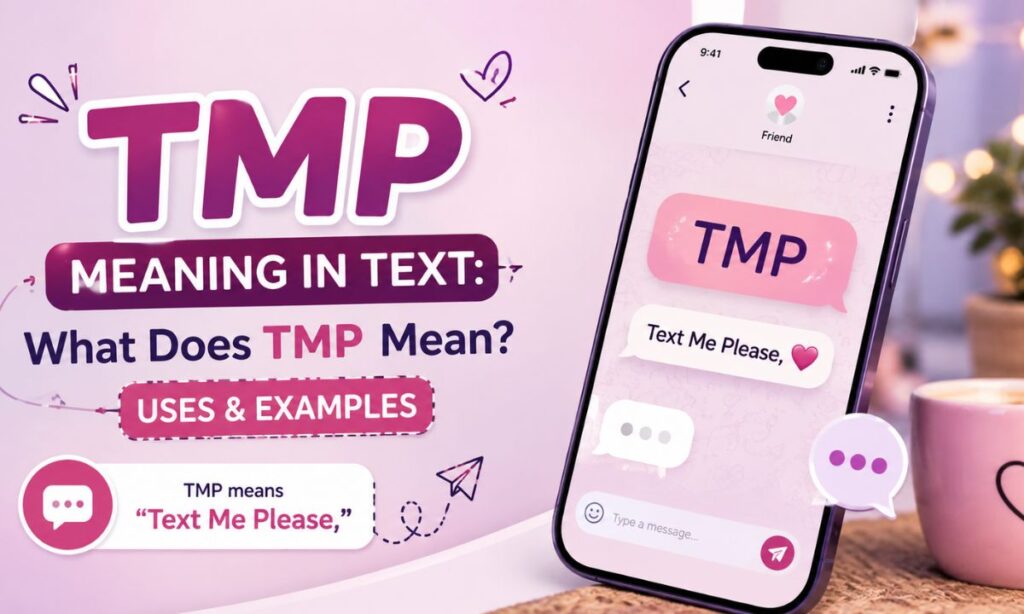

TMP shows up in three very different worlds, and the meaning changes completely depending on where you see it. In a text message, TMP almost always means “Text Me Please,” a quick way to ask someone to send a message. In a hospital or dialysis setting, TMP stands for Transmembrane Pressure, a clinical measurement. On a computer, TMP refers to a temporary file your operating system creates and usually deletes on its own.
This guide covers all three meanings in detail, starting with the texting definition most people are actually looking for, then breaking down how tone, sender, and context change what TMP is really asking for.
TMP – Quick Meaning
In texting and on apps like Snapchat and Instagram, TMP means “Text Me Please.” It is a casual, low-pressure way of asking someone to reach out over text instead of continuing the current conversation another way, or after a period of silence.
| Detail | Explanation |
| Full form (most common) | Text Me Please |
| Other possible meanings | Text My Phone, Temporary, Too Much Pressure |
| Type of term | Texting abbreviation / internet slang |
| Common platforms | Texting, Snapchat, Instagram, group chats |
| Typical tone | Casual, friendly, sometimes flirty |
| Non-slang meanings | Transmembrane Pressure (dialysis), Temporary file (computing) |
TMP is not one of the most widely used texting acronyms, but it appears often enough in casual chats and on social apps that most regular texters recognize it on sight.
Origin & Background
Like most texting shorthand, TMP grew out of early SMS character limits and the general push toward faster typing. As instant messaging and social apps expanded, users kept shortening common requests into three-letter codes, and “text me please” was an easy candidate for that treatment.
Unlike terms with a single clear origin story, TMP does not trace back to one platform or one viral moment. It developed alongside other utility abbreviations that exist mainly to save time rather than to build a specific internet subculture around them.
Real-Life Conversations
Here is how TMP typically plays out in an actual chat:
- “Can’t talk right now, TMP later” — asking for a text once the person is free
- “Hey, TMP when you land” — a quick request tied to a specific moment
- “I sent you something on Instagram, TMP” — asking someone to move the conversation to text
- “TMP, I have something to tell you” — signals the sender wants a more private or direct conversation
In each case, the underlying message is the same: the sender wants a text, not just a reply on whatever app they are currently using.
Emotional & Psychological Meaning
On the surface, TMP is a simple logistical request. But the emotional weight behind it depends heavily on who sent it and what led up to it.
- From a close friend, it usually just means they want to keep talking somewhere more convenient
- After a period of distance, it can signal an attempt to reopen a conversation
- In a tense exchange, it can mean the sender wants to talk privately rather than in a group setting
- Paired with a vague statement like “we need to talk,” it can carry more weight than the letters alone suggest
The phrase itself is neutral. Context, timing, and relationship history are what turn it into something casual, urgent, or emotionally loaded.
Tmp meaning in text from a girl

When a girl sends TMP, it generally means exactly what it says: she wants a text. There is no reliable evidence that the meaning of TMP changes based on the sender’s gender, and claims that it carries a hidden or different meaning “from a girl” specifically are not well supported.
What does shift is tone, and that depends on the relationship, not gender. A TMP from a girl you already talk to regularly is usually just a normal check-in. A TMP after a first date or early in a dating app conversation can carry more interest behind it, since it signals she wants a more direct line of communication.
Usage in Different Contexts
TMP shows up slightly differently depending on the platform and situation.
- Texting: most often used to ask for a reply outside the current thread
- Snapchat and Instagram: commonly used to move a conversation off the app and into direct texting
- Group chats: less common, since TMP implies a private, one-on-one text
- Dating apps: can signal a desire to exchange numbers or move to a more personal channel
- Work or professional chats: rare, and generally not appropriate
When NOT to Use It
TMP is casual shorthand, so it does not fit every situation. Avoid it in:
- Professional emails or work messaging platforms
- First messages to someone you do not know well
- Serious or sensitive conversations that need a clear, direct request
- Messages to people who are unfamiliar with texting abbreviations, since it can just read as confusing
If clarity matters more than speed, “Can you text me?” gets the same point across without any risk of being misread.
Tmp meaning in dialysis
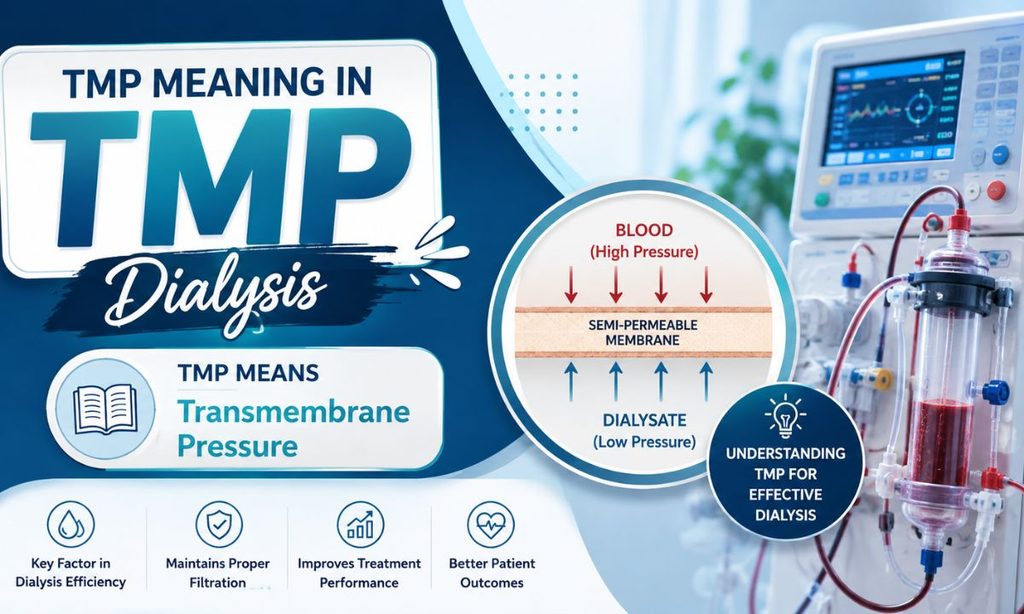
In a medical setting, TMP stands for Transmembrane Pressure. This is the pressure difference across the membrane in a dialyzer, and it is one of the key measurements used to monitor dialysis treatment.
Transmembrane pressure reflects the combined pressure gradient across the dialysis membrane and drives the movement of fluid and waste out of the blood and into the dialysate. Clinicians watch TMP closely during treatment. A drop in TMP can indicate a leak in the membrane, while a rise can point to clogging or reduced filter performance. Keeping TMP within a safe range is important, since pressure that runs too high can stress blood cells, while pressure that runs too low can make filtration less effective.
This meaning has nothing to do with the texting definition. If you see TMP mentioned in a medical chart, a nephrology article, or dialysis equipment documentation, it refers to this pressure measurement, not a text request.
Also Read This:STSU Meaning in Text: What Does STSU Mean? Definition & Uses
Common Misunderstandings
- Assuming TMP always means “Text Me Please,” when context (medical, technical) can point to a completely different meaning
- Confusing TMP with TMI (“Too Much Information”), which is unrelated
- Treating “Too Much Pressure” or “The Main Point” as widely recognized meanings, when they show up far less often than “Text Me Please”
- Assuming the texting meaning shifts based on the sender’s gender, when tone is really driven by relationship and context, not who sent it
Comparison Table
| Abbreviation | Meaning | Typical Context |
|---|---|---|
| TMP | Text Me Please | Casual texting, social apps |
| TMI | Too Much Information | Reacting to an overshare |
| TTYL | Talk To You Later | Ending a conversation |
| WYD | What (Are) You Doing | Checking in, casual opener |
| HMU | Hit Me Up | Requesting contact, similar to TMP |
TMP meaning in computer
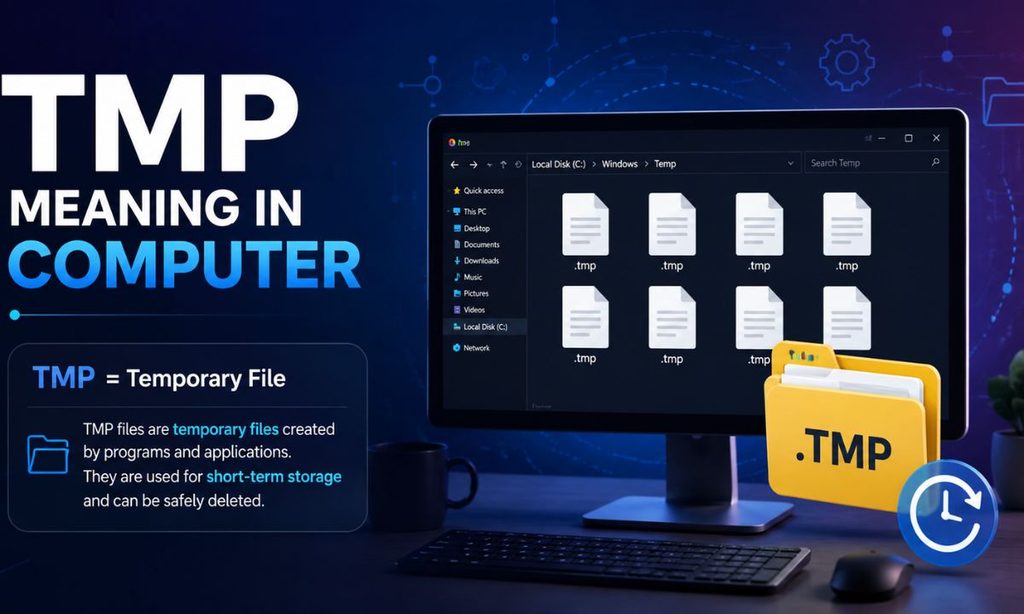
On a computer, a .tmp file is a temporary file created automatically by an operating system or software program while it works. These files are used for backups, caching, or holding data mid-process, and most are deleted automatically once the program closes or finishes its task.
On Windows, temporary files typically live in the AppData\Local\Temp folder, while Unix-like systems use a /tmp directory. Programs like Microsoft Word rely on TMP files for autosave protection, so a document can be recovered if a program crashes or a computer shuts down unexpectedly.
Because TMP is a naming convention rather than a fixed file format, one .tmp file can look completely different from another depending on which program created it. In most cases, you never need to open one directly, and it is generally safe to delete leftover TMP files from programs that are no longer running.
Variations / Types
| Meaning | Context |
| Text Me Please | Casual texting, most common slang meaning |
| Text My Phone | Similar texting request, less common variant |
| Temporary | Work chats, tech, and computing shorthand |
| Too Much Pressure | Informal, less common emotional usage |
| Transmembrane Pressure | Clinical dialysis terminology |
How to Respond When Someone Uses It
- Simply send a text if you are free: a quick message is the most direct response
- Reply with timing if you are busy: “Can’t right now, will text you tonight”
- Ask for clarity if the context is unclear: “About what?” works fine if there was no lead-up
- Match the tone: keep it casual if the message feels casual, and take it seriously if it follows a tense conversation
Regional & Cultural Usage
TMP does not show strong regional or cultural variation the way some slang terms do. It functions as general-purpose texting shorthand across English-speaking users, without a specific origin tied to one community, platform, or region. Its usage is driven more by texting habits and generation than by geography.
Tmp meaning in text from a guy

From a guy, TMP carries the same core meaning as it does from anyone else: a request to be texted. As with the “from a girl” version of this question, there is no solid basis for a gender-specific hidden meaning.
Where tone differs, it usually comes down to context rather than gender. A TMP sent casually among friends reads as neutral. A TMP sent early in a dating conversation, or after a compliment, is more likely to carry interest behind it. Reading the surrounding conversation gives a much clearer answer than assuming the sender’s gender changes the definition.
Is It Safe for Kids?
Yes. TMP is not offensive, inappropriate, or tied to anything harmful. It is a neutral, functional piece of texting shorthand, and there is nothing about the term itself that needs restricting for younger users.
Frequently Asked Questions
What does TMP mean in a text message?
TMP most commonly means “Text Me Please,” a casual request for someone to send a text.
Does TMP mean something different from a girl or a guy?
No. The core meaning stays the same regardless of sender; tone shifts based on relationship and context, not gender.
What does TMP mean in dialysis?
It stands for Transmembrane Pressure, the pressure difference across a dialyzer membrane used to monitor dialysis treatment.
What does TMP mean on a computer?
It refers to a temporary file, usually created automatically by a program and deleted once it’s no longer needed.
Is TMP the same as TMI?
No. TMP means “Text Me Please,” while TMI means “Too Much Information,” and the two are unrelated despite the similar look.
Conclusion
TMP is a good example of how the same three letters can mean entirely different things depending on where they show up. In texting, it’s a casual, friendly request to send a message. In dialysis, it’s a precise clinical measurement. On a computer, it’s just a temporary file quietly doing its job in the background. Checking the context, rather than assuming one universal meaning, is the fastest way to know exactly what TMP is telling you.



Pingback: NMMS Meaning in Text: What Does NMMS Mean in Messages & Social Media?