
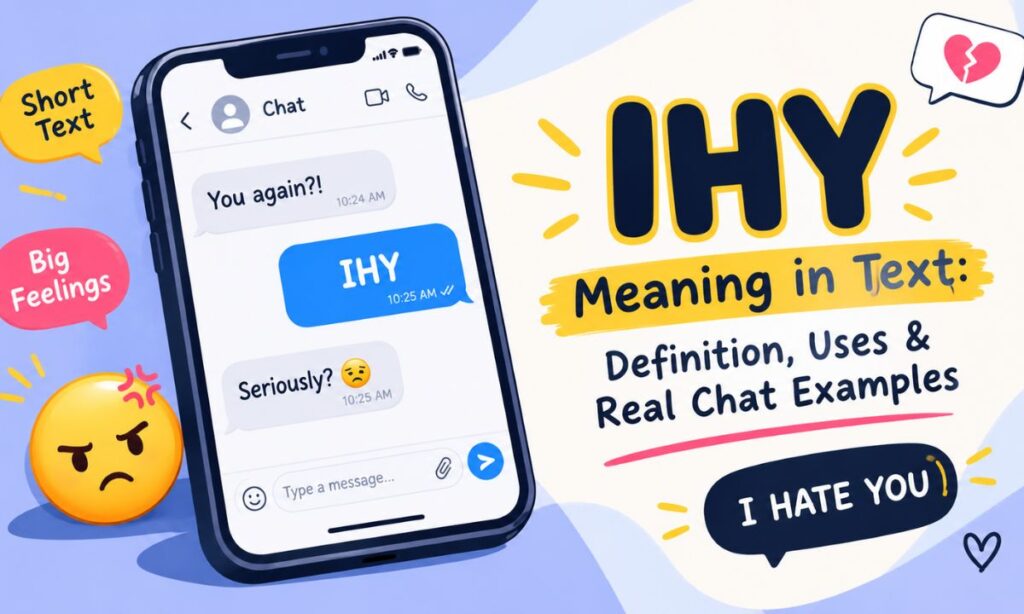

Getting a text that just says “ihy” can land two completely different ways depending on who sent it and what just happened. It might be a real expression of anger, or it might be the exact opposite: a joke, a tease, or even a weirdly affectionate thing people say when someone gives them butterflies. This guide breaks down what IHY actually means, why the same three letters can carry opposite emotions, and how to tell which one you’re dealing with.
Quick Answer: What Does IHY Mean?
IHY stands for “I Hate You.” In texting, it’s rarely meant as literally as it sounds. Most of the time it’s used playfully, sarcastically, or as an exaggerated reaction to something small, though it can occasionally be sincere when someone is genuinely upset.
What Does IHY Mean In Text?
At its core, IHY is a shortened way of typing “I Hate You.” Like most texting acronyms, it exists because typing three letters is faster than typing three words, especially in fast-moving conversations on Snapchat, TikTok, or group chats. The literal words don’t change based on where you see it; what changes is the emotional weight behind them.
That’s the part people get tripped up on. “I hate you” said out loud usually means something serious. IHY, in texting culture, has drifted much further from that literal meaning than most abbreviations do. It’s closer to a reflex reaction, something typed after a friend beats you in a game, sends an embarrassing photo, or makes you laugh when you didn’t want to.
Origin And Evolution Of IHY
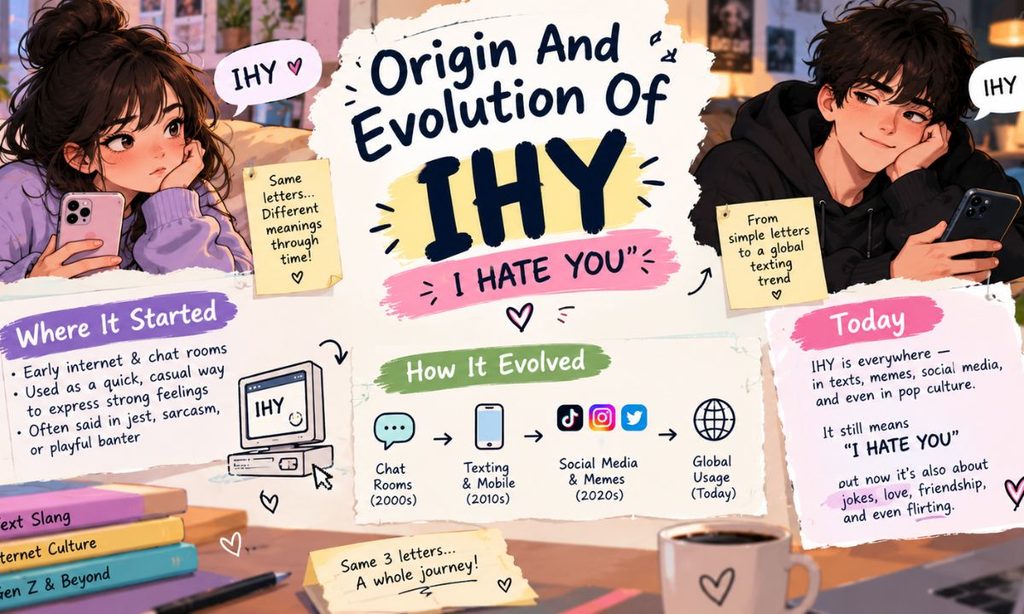
IHY follows the same path as countless other texting abbreviations: a common phrase gets shortened for speed once messaging shifts from typed-out sentences to quick back-and-forth exchanges. “I hate you” was already common in casual speech long before texting existed, often used sarcastically between friends or siblings rather than literally.
As SMS and instant messaging took off in the 2000s, phrases like this got compressed into acronyms the same way “laughing out loud” became LOL. IHY caught on for a specific reason: sarcastic or mock-frustrated “I hate you” was already a common phrase between close friends, so shortening it was a natural next step. Its popularity picked up further through TikTok captions and Twitter/X replies, where a short, punchy reaction outperforms a full sentence, and where the phrase’s dual meaning (real annoyance vs. affectionate teasing) made it useful in a wide range of posts.
IHY Meaning Based on Who’s Sending It
A common claim floating around online is that IHY “means something different from a girl than it does from a guy.” That’s not really accurate. The words don’t change meaning based on the sender’s gender; there’s no established linguistic pattern that supports that idea, and treating it as fact oversimplifies what’s actually going on.
What genuinely changes the meaning is the relationship and the history between the two people texting, not who’s typing it. The same “ihy” can be:
- Playful and affectionate between two close friends who tease each other constantly
- Flirty when sent after someone gives you butterflies or catches you off guard
- Genuinely frustrated when sent after an argument or broken plan
- Neutral banter in a group chat with no real emotional weight at all
If you’re trying to decode a specific text, look at the relationship and the conversation that led up to it, not the sender’s gender.
Psychological And Emotional Meaning Of IHY
IHY works because language often uses exaggeration to express affection. Saying “I hate you” over something trivial, like a friend beating you at a game or making you laugh at a bad time, signals closeness rather than distance. This kind of mock-negative language shows up in plenty of close relationships: it’s the same instinct behind calling a friend an insulting nickname affectionately.
The emotional core of IHY usually falls into one of two buckets:
- Non-literal IHY: exaggerated, sarcastic, or teasing, often paired with laughter or a compliment
- Literal IHY: a real expression of anger or hurt, usually appearing after conflict, with no joking tone around it
Reading which bucket applies comes down to tone, punctuation, and what was said right before it.
Communication Function Of IHY
Beyond the emotional layer, IHY does practical conversational work. People use it to:
- React quickly to something funny, embarrassing, or impressive without writing a full sentence
- Soften a compliment by disguising it as an insult (“ihy for being right again”)
- De-escalate mild annoyance by exaggerating it into something obviously joking
- Occasionally signal real frustration when someone wants to shut a conversation down
Because it can serve so many functions, IHY rarely stands entirely on its own for interpretation. The words around it carry most of the actual meaning.
Cultural And Generational Context Of IHY
IHY is most common among teens and younger adults active on TikTok, Snapchat, and group texting, though the underlying joke (mock-hating someone you actually like) isn’t new to any one generation. What’s changed is the format: shortening it to three letters and using it as a caption or quick reply is a habit specific to fast-paced digital messaging.
Older or less internet-savvy recipients are more likely to take IHY at face value, since they may not be as familiar with the exaggerated, affectionate way younger users deploy it. That gap is worth keeping in mind before sending it to someone outside your usual texting circle.
Most Common IHY Meaning In Text (Deep Dive)
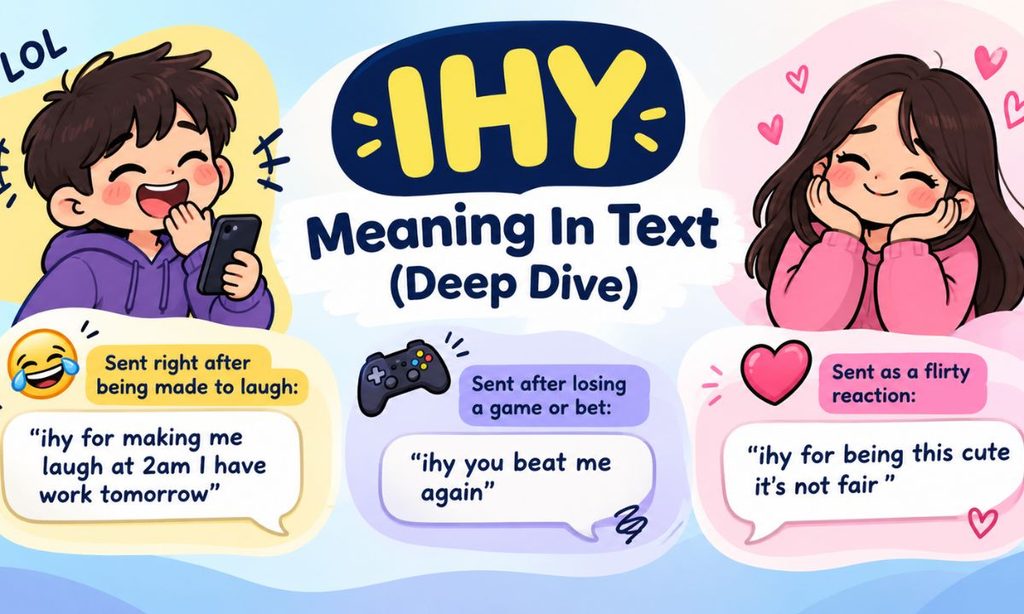
In the overwhelming majority of everyday texts, IHY is not literal. It shows up most often as a reaction to something the sender actually enjoyed, found funny, or got flustered by. A few real patterns:
- Sent right after being made to laugh: “ihy for making me laugh at 2am I have work tomorrow”
- Sent after losing a game or bet: “ihy you beat me again”
- Sent as a flirty reaction: “ihy for being this cute it’s not fair”
The literal, angry version does exist, but it’s the minority use case and it almost always comes with other signs of real conflict, like short replies, no punctuation softeners, or a conversation that was already tense.
Also Read This:DPMO Meaning in Text: What Does DPMO Mean in Chat & Social Media?
Meaning Based On Context
Where IHY lands emotionally depends heavily on what surrounds it. A few reliable signals:
- Followed by “jk” or a heart emoji: almost always affectionate
- Sent mid-argument with no emoji or softening: likely sincere frustration
- Sent after a compliment or inside joke: playful, not literal
- Sent as a one-word reply with no prior context: ambiguous, worth asking about
How IHY Is Used In Real Conversations
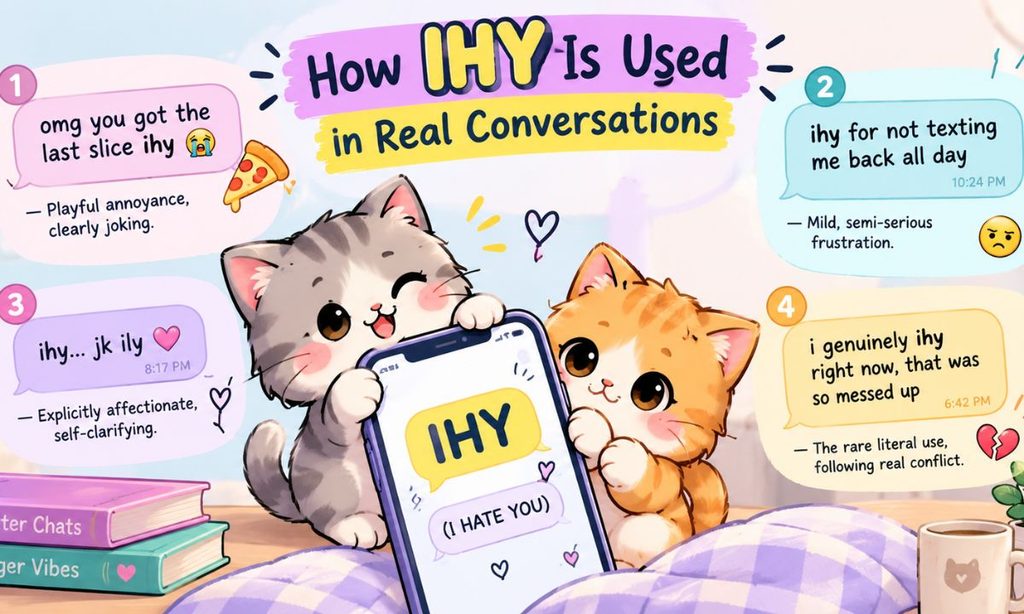
- “omg you got the last slice ihy 😭” — playful annoyance, clearly joking
- “ihy for not texting me back all day” — mild, semi-serious frustration
- “ihy… jk ily” — explicitly affectionate, self-clarifying
- “i genuinely ihy right now, that was so messed up” — the rare literal use, following real conflict
IHY Meaning On Different Platforms
| Platform | Typical Usage | Typical Tone |
|---|---|---|
| Texting/iMessage | Direct reaction to something the other person did | Playful, occasionally sincere |
| Snapchat | Caption on a photo or quick chat reply | Affectionate, joking |
| TikTok | Comment reacting to a relatable or funny video | Exaggerated, humorous |
| Twitter/X | Quick reply expressing mock outrage | Sarcastic, performative |
| Discord | Reaction to losing a game or being teased | Competitive, joking |
When To Use Vs When To Avoid IHY
IHY works well with people who already understand your texting style and know you don’t mean it literally. It’s best avoided with new acquaintances, in professional messages, or with anyone who might not catch the joking tone, since “I hate you” reads very differently to someone unfamiliar with how casually it gets thrown around online.
Hidden Or Risky Meanings Of IHY
The main risk with IHY is misjudging the moment. Sending it as a joke during an actual disagreement can make things worse, since the recipient may not be in a headspace to read it as playful. On the flip side, if someone sends IHY during a real conflict and you respond as if it’s a joke, it can come across as dismissive of how they’re actually feeling. When in doubt, especially after tension in a conversation, it’s safer to ask directly rather than guess.
Variations And Forms Of IHY
| Form | Meaning |
|---|---|
| IHY jk | “I hate you, just kidding” — explicitly affectionate |
| IHYSM | “I hate you so much” — intensified version, usually still playful |
| IHY but ily | Directly pairs mock-hate with real affection (“I love you”) |
| Ihy 😭 / ihy 💀 | Emoji-softened, almost always joking |
IHY Vs Similar Slang
| Term | Meaning | How It Differs From IHY |
|---|---|---|
| IDGAF | I Don’t Give A F*** | Expresses indifference, not affection or anger toward the recipient |
| IDC | I Don’t Care | Softer indifference, no emotional charge toward the other person |
| ILY | I Love You | Direct opposite sentiment, sometimes paired with IHY for contrast |
| SMH | Shaking My Head | Disapproval or disbelief, not hate or affection |
How To Decode The Correct Meaning
When you’re not sure how to read an IHY text, work through it in order:
- Look at what happened right before it. A joke, win, or compliment usually points to playful use.
- Check for softeners like “jk,” emojis, or exclamation points, which almost always signal non-literal use.
- Consider the relationship. Close friends and partners use IHY playfully far more often than acquaintances do.
- Notice the absence of softeners. A flat, punctuation-free “ihy” during a tense conversation is more likely sincere.
- If it’s genuinely unclear, ask. A simple “wait are you actually mad?” clears it up faster than guessing.
A common misunderstanding worth flagging here: assuming IHY is always joking. It isn’t. Context, not the letters themselves, decides the meaning, and skipping that check is where most misreads happen.
How To Respond To IHY
- If it’s clearly playful: mirror it back, like “ihy too” or “rude but ok”
- If it’s flirty: lean into it or respond warmly if you feel the same way
- If it feels sincere: ask what’s wrong rather than joking back
- If you’re unsure: a light “wait, are you being serious?” resolves the ambiguity quickly
Regional And Cultural Usage Of IHY
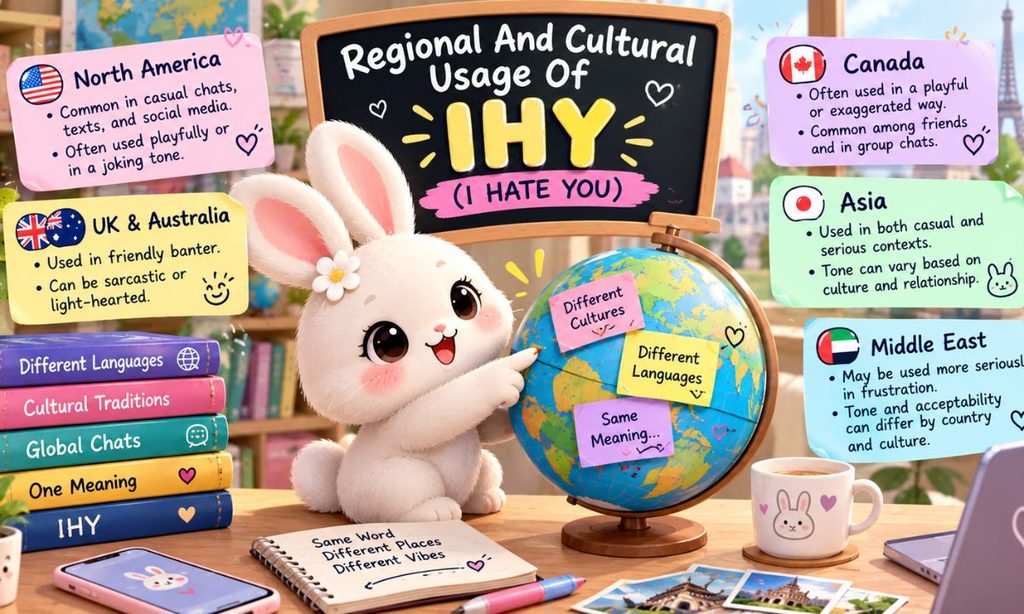
IHY doesn’t carry strong regional variation the way some slang does; its meaning shifts more with platform and relationship than geography. It’s used broadly across English-speaking texting culture, with heaviest use among younger users on TikTok, Snapchat, and group chats rather than being tied to a specific region or community.
Frequently Asked Questions
Does IHY always mean someone is actually mad?
No. Most of the time IHY is playful or affectionate, and it’s only sincere when it appears alongside other signs of real conflict.
What does IHY mean on Snapchat specifically?
On Snapchat, it’s almost always used as a playful caption or reaction, similar to how it’s used in texting.
Is it rude to send IHY to someone new?
It can be, since someone unfamiliar with your texting style may take it literally rather than as a joke.
What’s the difference between IHY and IDGAF?
IHY expresses a mock or real negative feeling toward the person you’re texting, while IDGAF expresses indifference to a situation, not the person.
How do I know if someone means IHY seriously?
Look for the absence of jokes, emojis, or softeners, and consider whether the conversation was already tense before it was sent.
Conclusion
IHY stands for “I Hate You,” but in texting, the literal words rarely match the actual intent behind them. Most of the time it’s a playful, affectionate, or sarcastic reaction rather than a real expression of anger, and the surrounding context, not the sender’s gender or the platform alone, is what tells you which one you’re dealing with. When the tone genuinely isn’t clear, asking directly beats guessing every time.



Pingback: RS Meaning in Text: What Does RS Mean in Chat & Social Media?