
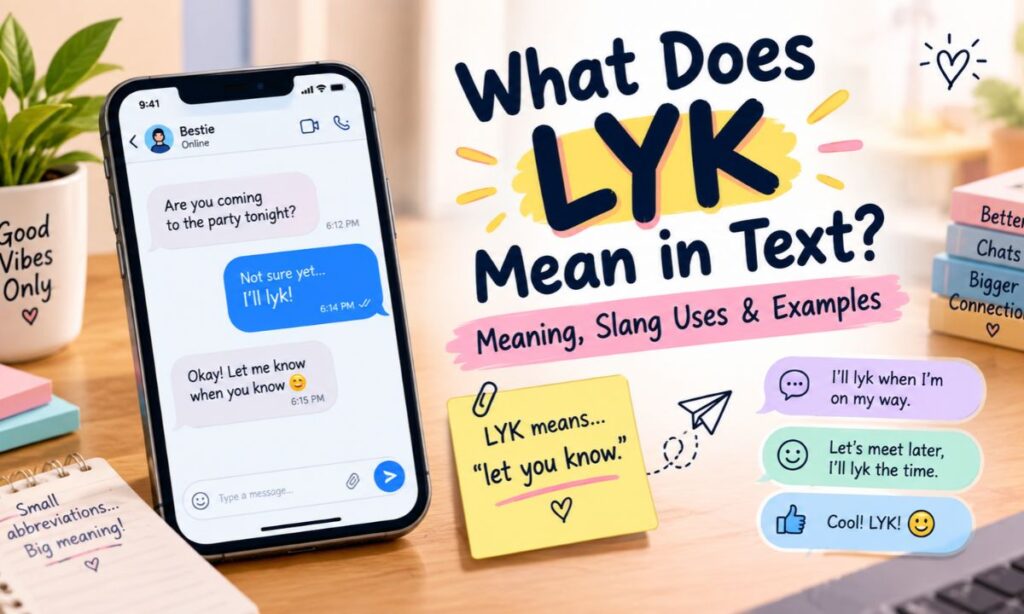

LYK is a texting abbreviation with two common meanings: “let you know” and an informal spelling of “like.” Most of the time, when someone sends LYK on its own or ahead of an update, they mean “I’ll let you know.” When it shows up inside a sentence describing a feeling or opinion, it’s almost always standing in for “like.”
The reason people search for this term is simple: the same three letters point to two different meanings, and text messages don’t come with a built-in translator. This guide breaks down both meanings, shows you how to tell them apart from context, and covers the situations where LYK works well and where it doesn’t.
Why This Gets Confusing
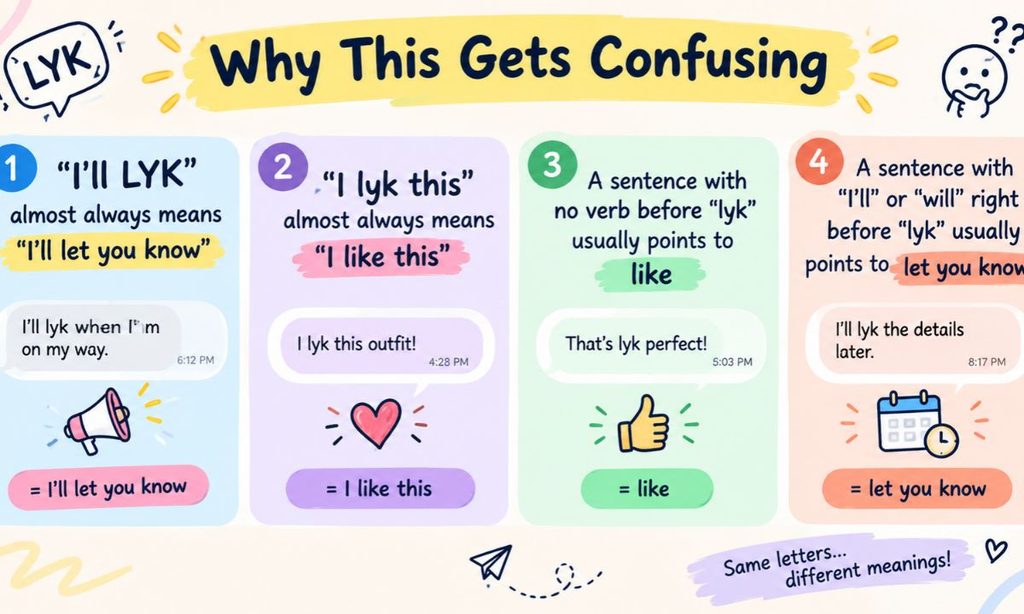
LYK doesn’t have one fixed definition the way an acronym like ASAP does. It functions more like a flexible shorthand that changes meaning depending on where it lands in a sentence. That’s unusual for texting slang, and it’s the main reason people stop mid-conversation to double check what someone meant.
Add in a similar-looking typo, LKY, and the confusion compounds. A single dropped or swapped letter can send someone down the wrong interpretation entirely, especially if they’re reading quickly on a small screen.
What It Actually Means in Real Life
LYK has two real, active meanings. Context decides which one applies.
- Let You Know — used when someone doesn’t have an answer yet but plans to update you later. Example: “Not sure if I’m free Friday, I’ll LYK.”
- Like — an informal, shortened spelling of the word “like,” used the same way you’d use “like” in a sentence. Example: “I lyk this song a lot.”
Here’s the quickest way to tell them apart: if LYK comes right before or after a verb like “I’ll” or “I will,” it means “let you know.” If it sits where the word “like” would normally go in a sentence, it means exactly that.
How People Use It in Everyday Situations
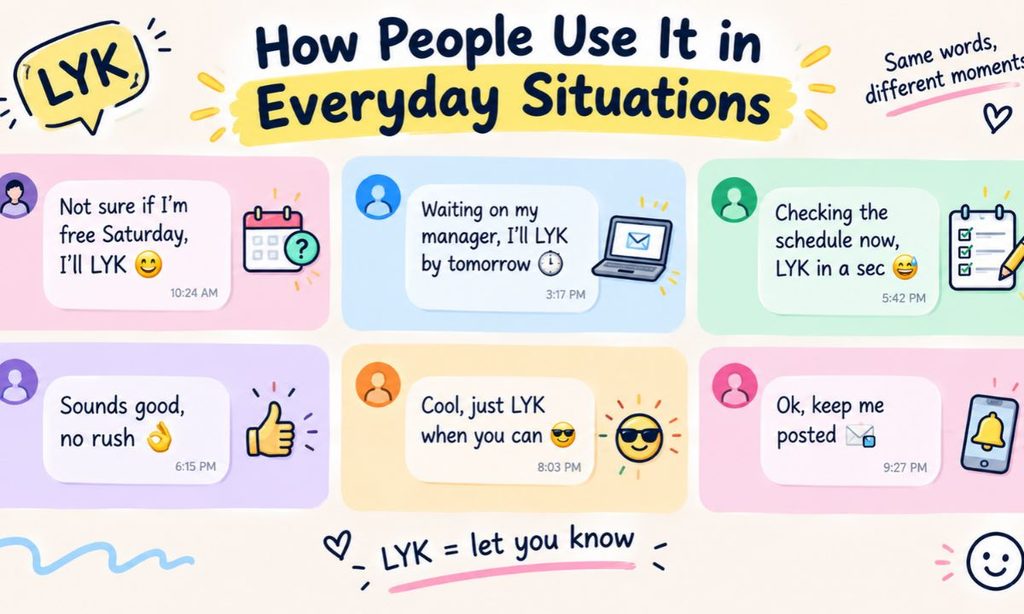
Both meanings show up constantly in casual texting, group chats, and social captions. A few realistic examples:
- “Still checking my schedule, I’ll lyk by tonight.”
- “Lyk this fit or nah?”
- “Waiting on the doctor to call back, will lyk when I hear something.”
- “Everyone in the group chat lyk that idea except me.”
- “Don’t have plans yet, lyk if you’re free this weekend and I’ll figure something out.”
Notice that the “let you know” version almost always involves a future update. The “like” version almost always describes a current opinion or preference. Once you spot that pattern, the meaning becomes obvious within the first few words of the message.
Tone & Context
LYK carries whatever tone the surrounding message sets, since the abbreviation itself is emotionally neutral. As “let you know,” it can read as polite, noncommittal, or even a little evasive if someone keeps saying they’ll LYK and never actually does. As “like,” the tone usually mirrors casual approval or preference, and dropping the extra letters just makes the sentence feel quicker and more relaxed.
Punctuation and what comes before it matter more than the abbreviation itself. “I’ll definitely LYK!” reads as enthusiastic. A flat “lyk.” with no follow-up can come across as dismissive, the same way any short, punctuation-free reply might.
Lyk Meaning From a Girl or a Guy
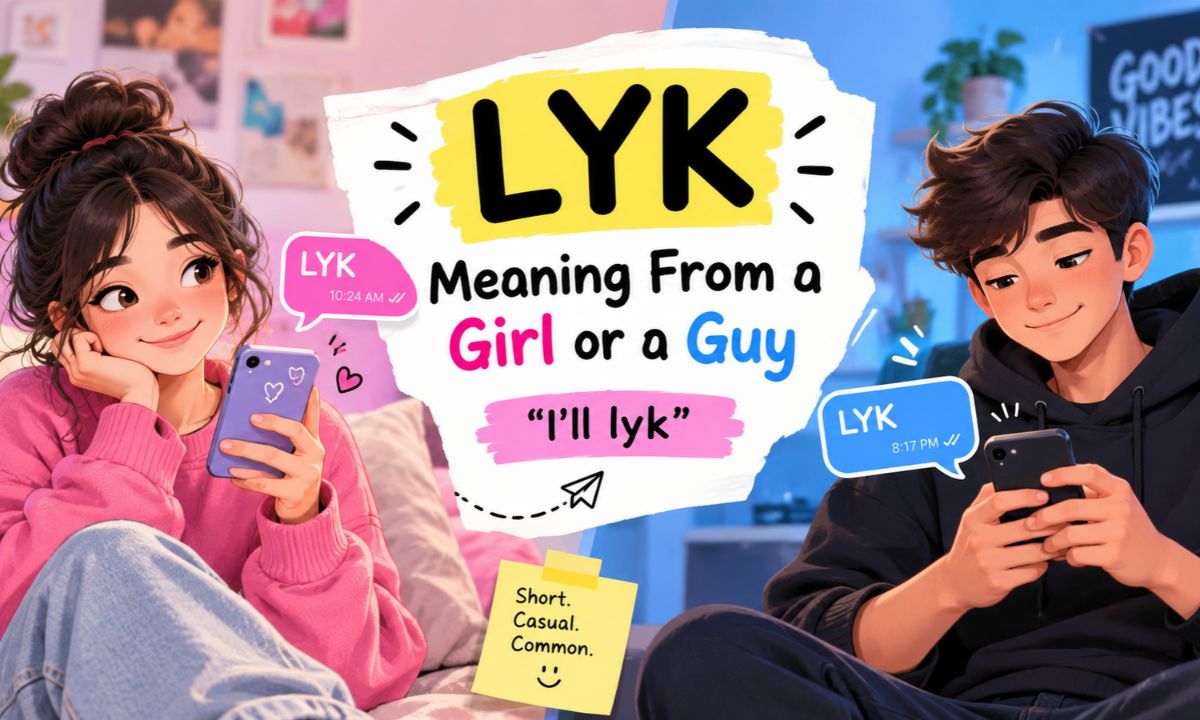
LYK doesn’t change meaning based on who sends it. If a girl or a guy texts “I’ll lyk,” it means the same thing either way: they don’t have an answer yet and will update you later. There’s no hidden gendered code behind the abbreviation, despite how often people search for one.
What does shift is context specific to the conversation, not gender. A “lyk” from someone you’re dating might carry more anticipation simply because you’re more invested in the answer, not because the word itself means something different.
When You Should NOT Use This Term
LYK is casual by nature, so it doesn’t belong in every setting. Avoid it in:
- Formal emails, cover letters, or business proposals
- Academic writing or reports
- First messages to someone you don’t know well in a professional context
- Conversations where clarity matters more than speed, like confirming a medical appointment or a legal deadline
In those situations, write out the full phrase instead. It takes a few extra seconds and removes any risk of the reader not recognizing the abbreviation.
Also Read This:What Does GTS Mean in Text? Real Meaning, Slang Uses & Examples
Natural Alternatives
If you want the same meaning without the abbreviation, these work well depending on the setting:
- Instead of “I’ll LYK” → “I’ll let you know” or “I’ll follow up once I hear back”
- Instead of “I’ll lyk soon” → “I’ll update you shortly”
- Instead of “lyk this outfit” → “like this outfit” (simply spell it out)
- In professional chat tools like Slack or Teams → “I’ll circle back with an update” reads more polished than LYK
Platform or Culture Notes
| Platform | Typical Usage |
|---|---|
| Mostly “let you know,” often tied to real logistics and plans | |
| Instagram/Snapchat | Mixed use, with “like” showing up more in captions and comments |
| Text messages (SMS) | Both meanings appear, context from the surrounding sentence decides |
| Slack/Teams | Occasionally used informally for “let you know,” but risky in formal threads |
Group chats tend to favor the “let you know” version since they’re often used to coordinate plans. Comment sections and captions lean toward the “like” version, since that’s closer to how people naturally phrase opinions.
Common Misunderstandings
A few mix-ups come up often enough to call out directly:
- LYK vs. LKY — these are not the same. LKY is usually just a typo of LYK, though in some gaming chats it’s shorthand for “lucky.” If the surrounding message doesn’t make sense as “lucky,” assume it’s a typo.
- LYK vs. FYI — FYI shares information right now. LYK promises information later. They’re not interchangeable.
- LYK vs. IDK — IDK just expresses uncertainty with no promise of an update. LYK adds the commitment to follow up.
- Assuming LYK always means the same thing — as covered above, the meaning depends entirely on how it’s placed in the sentence.
Lyk Meaning in English
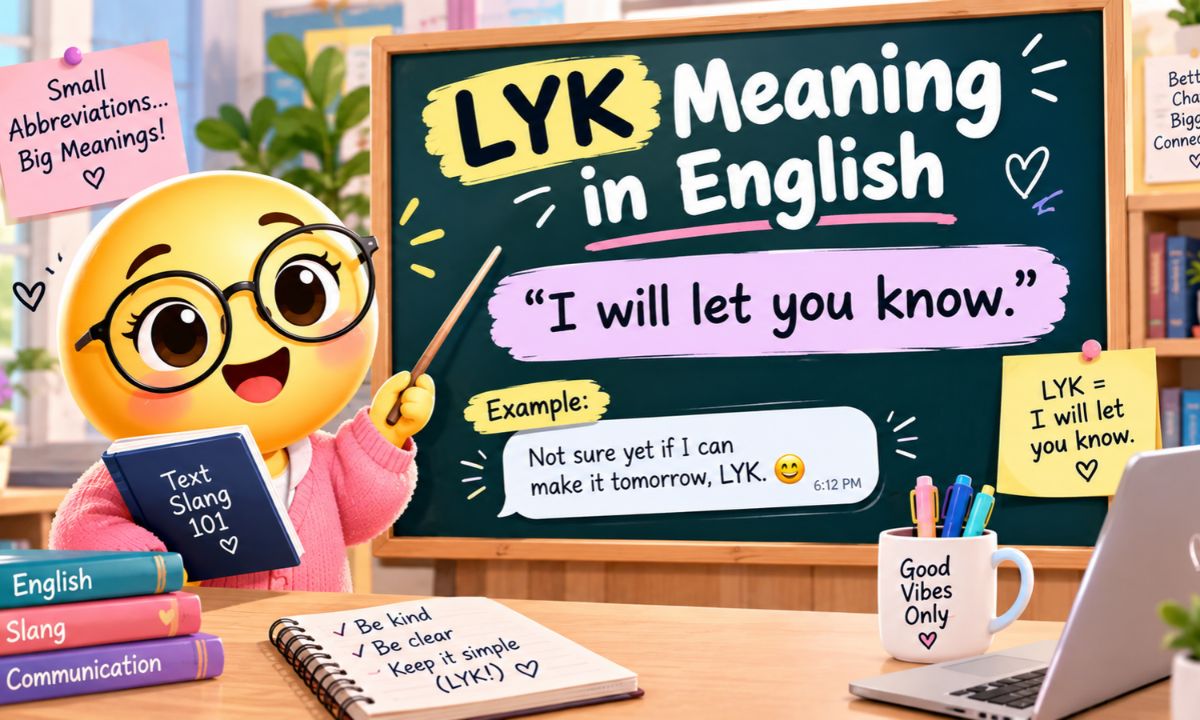
In plain English, LYK translates to one of two phrases: “I will let you know” or the word “like,” written in shortened form. It isn’t an official dictionary abbreviation and won’t appear in a standard dictionary entry, but it’s widely understood across texting and social platforms as informal shorthand for either phrase, depending on how it’s used in the sentence.
FAQs
What does LYK mean in a text message?
It usually means “let you know,” used when someone doesn’t have an answer yet but plans to update you. It can also be shorthand for “like,” depending on the sentence.
Is LYK the same as LKY?
No, LKY is typically just a typo of LYK, though it occasionally means “lucky” in gaming chats.
Does LYK mean something different from a girl or a guy?
No, the meaning doesn’t change based on who sends it. Context in the message decides the meaning, not gender.
Is it okay to use LYK in a work email?
It’s best avoided in formal emails and documents. Write out “I’ll let you know” or “I’ll follow up” instead.
How can I tell if LYK means “let you know” or “like”?
Check what comes right before it. If it follows “I’ll” or “I will,” it means “let you know.” If it sits where “like” would normally go, that’s the meaning.
Wrapping This Up
LYK isn’t a single-meaning acronym, and that’s exactly why it trips people up. Read it as “let you know” when it’s attached to a future update, and as “like” when it’s describing an opinion or preference. Once you spot that pattern, the confusion clears up fast, and you can use LYK naturally in casual texting while knowing exactly when to skip it in favor of a full sentence.



Pingback: What Does SMT Mean in Text? Meaning, Slang Uses & Examples (2026 Guide)