


Snow bunny is slang with two main meanings. In its original sense, it describes a young woman who skis or snowboards, often a beginner or someone known for the stylish ski-resort scene. In its other widely recorded sense, it describes a white woman who dates or prefers Black men, and dictionaries label that use as often disparaging and offensive.
Which meaning applies depends on who is speaking, who they are describing, and where the word appears. A caption from a ski trip reads very differently from a comment about someone’s dating life.
This guide covers each documented meaning, how to read the intent behind it, where the term came from, and when it is best left unsaid.
What Does Snow Bunny Meaning Slang?
Snow bunny is a slang noun for a woman, and its meaning depends on context. Dictionary.com lists two groups of senses. The first is a young woman who likes skiing or snowboarding, often an inexperienced one, or a flirty, fashionable woman who frequents ski resorts. The second, marked as often disparaging and offensive, is the white girlfriend of a Black man, a white woman who prefers Black sexual partners, or any attractive white woman.
According to Dictionary.com, “bunny” has been slang for an attractive woman since the 1700s, and “snow” points to either the slopes or, in the second group of senses, the color white.
Snow Bunny Has More Than One Meaning
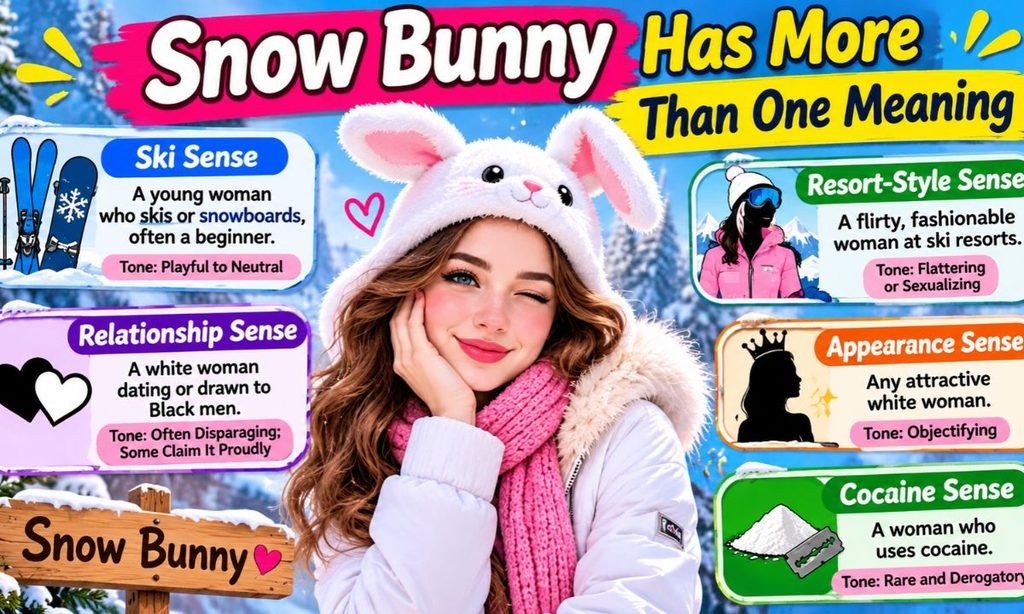
The table below separates each documented sense so you can match it to the situation you saw.
| Meaning | What It Describes | Typical Tone |
|---|---|---|
| Ski sense | A young woman who skis or snowboards, often a beginner | Playful to neutral, sometimes condescending |
| Resort-style sense | A flirty, fashionable woman at ski resorts | Flattering or sexualizing, depending on the speaker |
| Relationship sense | A white woman dating or drawn to Black men | Often disparaging; some claim it proudly |
| Appearance sense | Any attractive white woman | Objectifying |
| Cocaine sense | A woman who uses cocaine | Rare and derogatory |
The first four senses appear in Dictionary.com. The cocaine sense, tied to “snow” as slang for the drug, is listed by Wiktionary and was not found in the other dictionaries checked for this guide. Some blog pages present it as a major meaning, which overstates how common it is.
Where Is “Snow Bunny” Used?
The term shows up in four main settings:
- Ski resorts and winter travel: the literal sense, applied to beginners or to people with a polished winter look.
- Fashion and social media: hashtags, captions, and winter-outfit posts, as well as fashion coverage in outlets such as the Seattle Times.
- Dating and relationship talk: a 2012 Gender & Society study of Black college men and a 2020 Washington Post piece on Black teens and dating both cite the term in this sense.
- Texts, group chats, and comments: no platform-specific meaning is documented, so the same context rules apply as anywhere else.
What Does “Snow Bunny” Mean From a Guy?
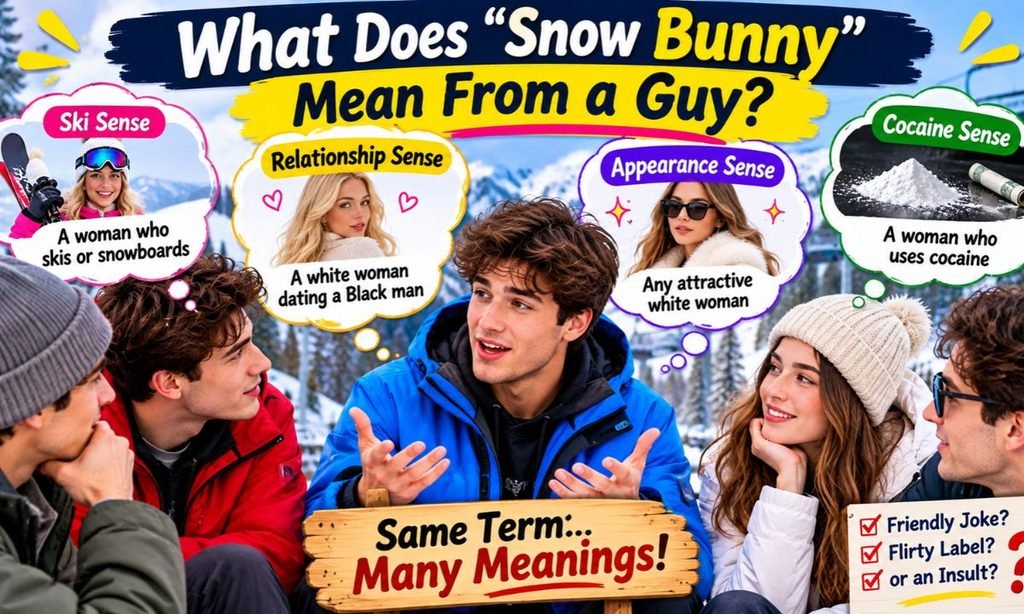
The sender’s gender does not change what the word means. What changes is who is speaking and who is being described, so this section also answers the “From a Girl” question.
- A man describing a woman at a ski resort: usually the ski sense, which can be a friendly joke or a sexualizing label.
- A man applying it to a white woman away from the slopes: usually the relationship or appearance sense. Dictionary.com notes the term is sometimes used when catcalling attractive white women, which carries racialized and sexist connotations.
- A woman calling herself a snow bunny on a ski trip: the playful ski sense, often joking about skill level.
- A white woman or an interracial couple using the label: Dictionary.com documents white women who date Black men calling themselves snow bunnies, and couples claiming the term proudly.
The same word can be an affectionate self-label or an insult. Speaker, target, and relationship decide which.
Real Conversation Examples
These examples are illustrative, written for this guide rather than quoted from real people.
- “Booked Whistler for March. I can’t ski, but I’m a full snow bunny in the boots.” This is the ski sense, said with self-deprecating humor.
- “Her whole feed is snow bunny fits and hot chocolate.” This is the fashion sense, neutral in tone.
- “Proud snow bunny, six years with my guy.” Posted by a white woman about her Black partner, this is the relationship sense claimed with pride.
- “That party’s going to be full of snow bunnies.” This is vague and objectifying, since it could mean skiers or white women, and the vagueness is part of the problem.
- “She only dates him because she’s a snow bunny.” This is the relationship sense used to judge someone’s motives, and it is the most likely to offend.
Also Read This:What Does CYA Mean in Text? Meaning, Slang Uses, Examples & How to Reply (2026)
What does it mean if a guy calls me a snow bunny?
Start with context, because intent is often readable from it.
- Setting: at a ski resort or in snow gear, the ski sense is the most likely meaning.
- Topic: if the conversation is about dating, race, or who you are seeing, the relationship sense is more likely.
- Relationship: a friend teasing you about your first ski trip is different from a stranger commenting on your appearance.
- Tone: framing it as a compliment does not stop it from being sexualizing.
If it is unclear, you can ask what he means. You also do not have to accept the label. “Please don’t call me that” is a complete answer, and if the comments are unwanted or keep coming, blocking or reporting is reasonable.
Is “Snow Bunny” Offensive?
It can be, depending on the sense. Dictionary.com marks the ski sense as sometimes disparaging and the relationship sense as often disparaging and offensive. Wiktionary tags the relationship sense as sometimes derogatory and an ethnic slur.
The concerns are consistent. The term defines a woman by her race and by the race of the people she dates, it often sexualizes her, and it can imply a judgment about her motives. Some people embrace it as a self-label, but that does not change how it lands when someone else applies it to them. Pages that describe it only as a cute winter nickname leave out this half of the picture.
Snow Bunny vs. Snowflake
Both words use snow imagery, but they are unrelated. “Snowflake” is a derogatory term for a person seen as overly sensitive or convinced of their own specialness, a sense Merriam-Webster added in 2019. Merriam-Webster also traces older uses, including an 1860s Missouri sense for someone opposed to abolition, and Wiktionary lists a slang use for a white person.
| Term | Core Meaning | Usually Aimed At | Tone |
|---|---|---|---|
| Snow bunny | A skier, or a white woman tied to dating Black men | Women | Playful to offensive |
| Snowflake | An overly sensitive or entitled person | Anyone, often young adults | Derogatory |
Snow Bunny vs. Winter Bunny
No major dictionary checked for this guide lists “winter bunny” as slang, so it has no documented meaning comparable to snow bunny. It most likely reads literally, as a rabbit in winter, or as a playful label for cozy winter style. The established near-synonyms for the ski sense are “ski bunny” and “slope bunny,” both listed by Wiktionary.
Because “winter bunny” has no documented relationship sense, it should not be treated as interchangeable with snow bunny. When someone uses it, the surrounding context is the only reliable guide.
Origin of “Snow Bunny”
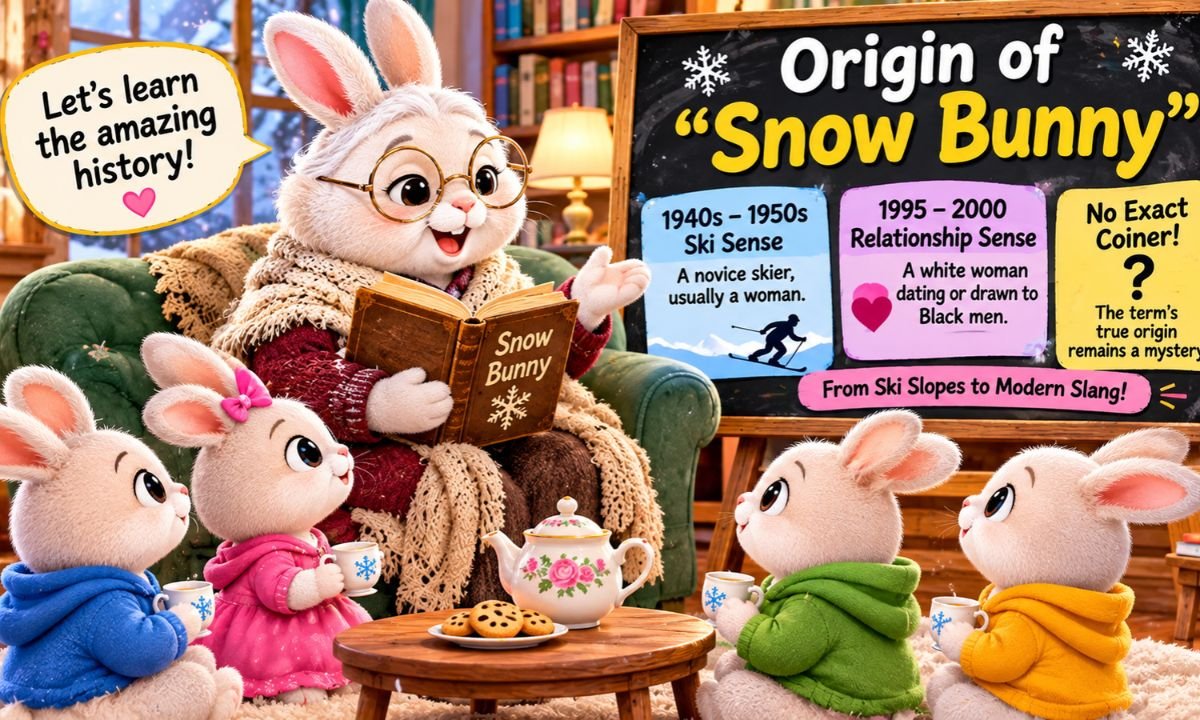
Dictionary.com places the original ski meaning in the 1940s to 1950s. Its main entry records the term from 1940 to 1945, while its slang guide describes it beginning in the 1950s as slang for a novice skier, usually a woman. Green’s Dictionary of Slang describes the term shifting toward women who frequent ski slopes for the social and sexual scene as much as the sport.
The relationship sense is more recent. Dictionary.com records it from roughly 1995 to 2000 and says that by the 2000s the word had become Black slang for a white woman. Wiktionary supports this with a 2007 play, the 2012 Gender & Society study, and the 2020 Washington Post article.
No coiner is documented. Postwar growth in skiing is useful background, but no source establishes who first used the term or exactly why it caught on.
Common Misunderstandings
- It only refers to skiing: dictionaries record both the ski sense and the relationship sense.
- It is always an insult: the ski sense is common, and some people use the term about themselves.
- It is harmless because it sounds cute: the relationship sense is labeled offensive by Dictionary.com.
- It has one fixed definition: online pages disagree on whether it means a white woman who “only” dates Black men or one who simply likes them, and the dictionaries use looser wording.
- It usually refers to cocaine: only Wiktionary lists that sense, and it is rare.
- It means the same as snowflake: the two words have different meanings and targets.
When Should You Avoid Saying “Snow Bunny”?
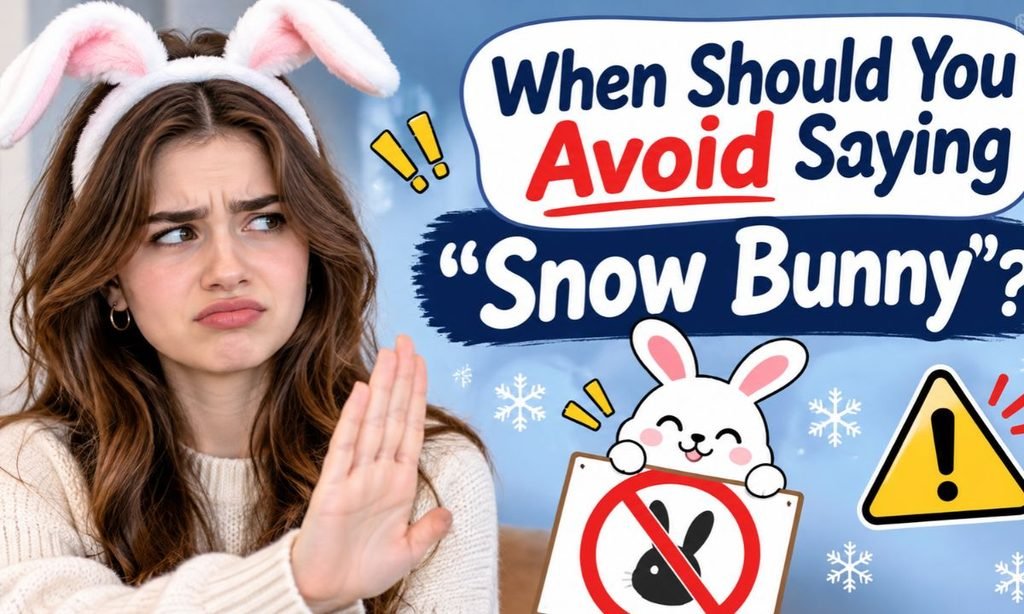
- When describing someone you do not know well, or someone who has not used the term about themselves
- When talking about a woman’s relationships or dating preferences
- In work chats, professional settings, or comments on a stranger’s photos
- Any time you cannot be sure how it will land
Plain alternatives work better in most cases, such as skier, snowboarder, beginner skier, or winter sports fan. The term is safest as a self-label in an obviously literal ski context.
Key Takeaways
- Snow bunny has a ski sense and a relationship sense, and context decides which one applies.
- Dictionary.com labels the relationship sense as often disparaging and offensive.
- Sender gender does not change the meaning, but speaker and target matter a great deal.
- The original ski sense dates to the mid-1900s, and the relationship sense is dated from the late 1990s.
- Winter bunny has no documented slang meaning, and snowflake is an unrelated word.
Frequently Asked Questions
What does snow bunny mean in slang?
It means a young woman who skis or snowboards, or, in another widely recorded sense, a white woman who dates or prefers Black men. Context decides which meaning is intended.
Is snow bunny a racial term?
In one of its documented senses, yes, and Dictionary.com labels that sense often disparaging and offensive. The ski sense does not refer to race.
Is a snow bunny always a white woman?
In the relationship and appearance senses, yes, by definition. The ski sense describes a young woman who skis or snowboards and does not specify race.
What is the difference between a snow bunny and a ski bunny?
Wiktionary lists ski bunny and slope bunny as synonyms of snow bunny in the ski sense. Neither is documented with the relationship sense.
Is it okay to call yourself a snow bunny?
In a clear ski or winter-fashion context, usually yes. Some white women who date Black men also use it about themselves, but others may still hear the offensive sense.
Conclusion
Snow bunny began as 1940s to 1950s ski-slope slang and picked up a second, more loaded meaning tied to race and dating by the late 1990s. The word is not a single definition, so reading the setting, the speaker, and the target matters more than the word itself. When in doubt, use a plain description instead.


Pingback: What Does LMY Mean in Text? Meaning, Slang Uses, Examples & How to Reply (2026)
Pingback: What Does OF Mean in Text? Meaning, Slang Uses, Examples & How to Reply (2026)