
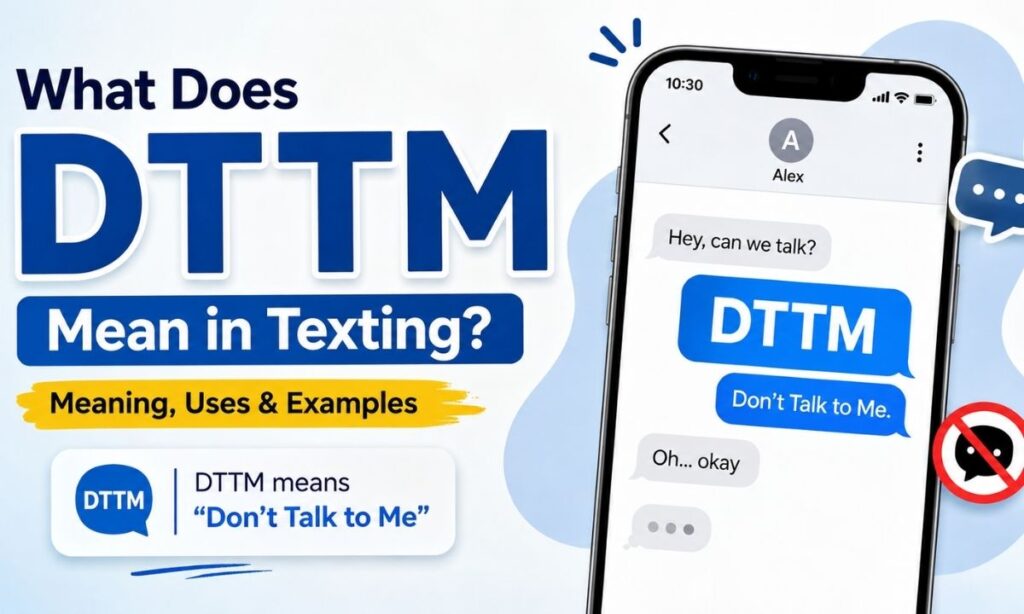

DTTM is one of those acronyms that looks harsher than it usually is. If someone just sent it to you, or you saw it in a comment section, chances are you want a fast, accurate answer rather than a long history lesson. The short version: DTTM almost always means “Don’t Talk to Me,” and it’s rarely as serious as it sounds.
This guide breaks down the real meaning, how it shifts across platforms and relationships, its lesser-known technical meaning, and exactly how to respond so you don’t accidentally make an already tense moment worse.
The Main Meaning Everyone Uses: Don’t Talk to Me
In everyday texting, DTTM stands for “Don’t Talk to Me.” It’s a fast way to signal that someone needs space, is annoyed, embarrassed, or simply done with a topic. Most of the time it’s not a literal demand for silence forever, it’s a dramatic shorthand for “I’m over this right now.”
- “Just tripped in front of the whole class, dttm 😭”
- “DTTM until I finish this deadline”
- “You told her? DTTM.”
Tone almost always comes from what surrounds the letters, not the letters themselves. An emoji or a joking follow-up softens it; a bare “DTTM.” with a period usually means the person wants the conversation to stop.
How DTTM Shows Up in Different Apps and Platforms
DTTM doesn’t behave the same way everywhere. The platform shapes how dramatic or genuine it reads.
| Platform | Typical Use | Typical Tone |
| Texting (SMS/iMessage) | One-on-one, often after an annoying event | Can be genuine or joking |
| Snapchat | Story caption or reply to a bad-day snap | Dramatic, playful |
| Comments or DMs, shutting down a topic | Mostly exaggerated | |
| TikTok | Paired with other slang like SMH or OMG in comments | Comedic, viral |
| One-on-one chats, often more literal | Leans more serious | |
| Discord | Group chats, gaming frustration | Playful venting |
Where Did DTTM Actually Come From? A Quick Trip Through Texting History
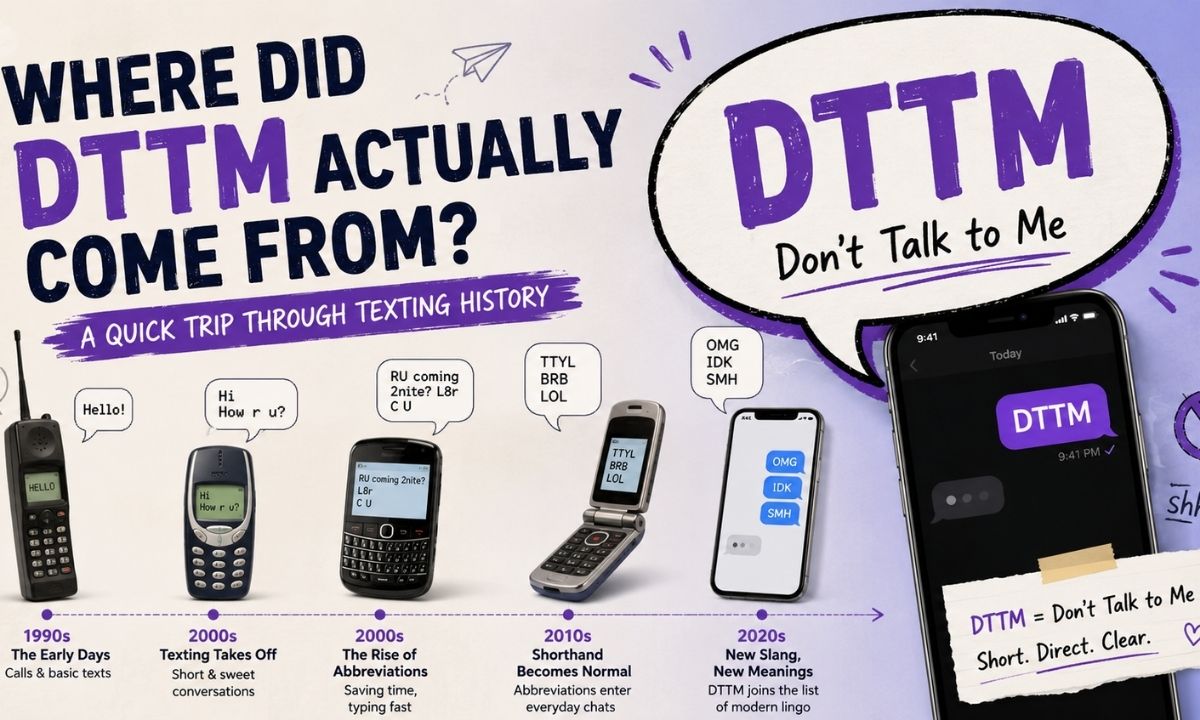
DTTM doesn’t have a documented single origin point the way some slang does. It followed the same path as older abbreviations like LOL, BRB, and SMH: a common spoken phrase, “don’t talk to me,” got shortened once SMS and early chat rooms made speed a priority. As smartphones and apps like Snapchat and Instagram took over from basic texting, the abbreviation spread further, especially among younger users who wanted a quick, low-effort way to signal irritation or set a boundary without writing a full sentence.
Other Meanings That Surprise People: Not Just Slang
“Don’t Talk to Me” is by far the dominant meaning, but a few other interpretations exist and occasionally cause confusion:
- “Don’t Think Too Much” – occasionally used as reassurance or advice, though far less common than the main meaning
- “Date Time” or “Date-Time Marker” – a technical meaning used in databases and IT (covered in detail below)
- Rare, joke-only variations that show up in specific niche communities and aren’t standard usage
If you’re reading a casual text or comment, assume “Don’t Talk to Me” unless the context clearly points elsewhere.
Real-Life Scenarios and How People Actually Use DTTM Every Day
DTTM tends to show up in a handful of predictable situations:
- After an embarrassing moment: “I called my teacher mom, DTTM 😂”
- During a stressful task: “DTTM until this report is done”
- To end gossip or drama: “I don’t even want to talk about it, DTTM”
- In gaming chats after a rough loss: “Lost five ranked games in a row, DTTM”
- As a genuine boundary: “I need space right now, dttm please”
The first four are almost always exaggerated for effect. The last one, especially without emojis or a joking follow-up, is the version worth taking literally.
The Psychology Behind Dropping a DTTM
DTTM works because it does emotional labor without requiring a full explanation. Typing “I’m overwhelmed and need to disengage from this conversation for a bit” takes effort and can feel exposing. Four letters accomplish the same goal with far less vulnerability. It’s a low-cost way to set a boundary, protect mental bandwidth, or defuse a moment with humor instead of confrontation. That’s also why tone reads so differently depending on delivery: a joking DTTM keeps the relationship light, while a cold, punctuation-free DTTM signals a real request for distance.
Dttm mean in text from a boy
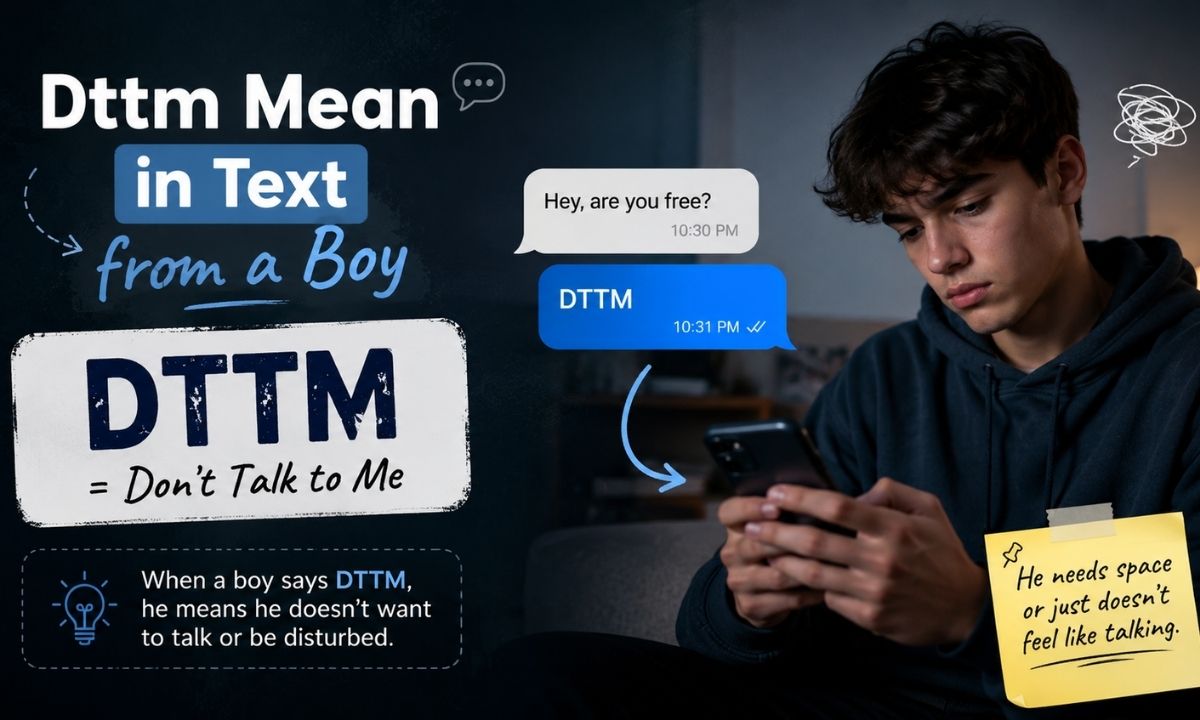
When a guy sends DTTM, the meaning doesn’t change, but the emotional read often does depending on the relationship. From a guy who texts you regularly and jokes around, DTTM after something embarrassing or annoying is almost always playful, similar to how anyone else would use it. From a guy who’s pulling back, gone quiet, or replying with just “DTTM.” after a disagreement, it’s more likely a genuine signal that he wants space or is frustrated. As with any version of DTTM, the surrounding conversation and his usual texting style matter more than the acronym itself.
How to Reply When Someone Hits You With DTTM (Without Making It Worse)
- Read the tone first. Check for emojis, punctuation, or a joking setup before deciding how seriously to take it.
- If it’s playful, match the energy. A simple “lol okay” or a joke back usually works fine.
- If it seems genuine, give space instead of pushing. Something like “okay, here when you’re ready” respects the boundary without dropping the relationship.
- Avoid firing back questions immediately. Asking “why not” or “what did I do” right after a DTTM often escalates things.
- Follow up later if needed. If it was serious, a calmer check-in an hour or a day later usually lands better than pressing in the moment.
Also Read This: What Does IONK Mean in Texting? Meaning, Origin & Examples
Similar Slang and How DTTM Stacks Up Against Them
| Term | Meaning | Intensity |
| DTTM | Don’t Talk to Me | Medium, often playful |
| DTM | Don’t Text Me | Firmer, more final |
| Leave me alone | Direct request for space | High, usually more serious |
| IDGAF | I Don’t Give A F*** | High, blunt indifference |
| SMH | Shaking My Head | Low, disapproval or disbelief |
DTTM in Relationships, Friendships, and Even Pop Culture
Among friends, DTTM is usually harmless, a way to tease or vent without real conflict. In relationships, a repeated or cold DTTM can signal genuine emotional distance and is worth addressing directly rather than ignoring. In pop culture, the phrase shows up in reality TV moments during tense exchanges and in short-form video skits about bad dates or family drama, though it hasn’t reached the mainstream recognition of older slang like LOL.
Global Twists and Cultural Takes
DTTM is most common in English-speaking texting culture, particularly among younger users in the US and UK. In other regions, people often lean on full phrases, voice notes, or stickers to express the same “back off” feeling rather than adopting the acronym directly. Because major messaging apps are used worldwide, the term still travels well between international friend groups even where it isn’t native slang.
Technical and Professional Sides: When DTTM Means Something Else Entirely
Outside of casual chat, DTTM has a completely different, well-established meaning: Date-Time, sometimes written as Date-Time Marker. It’s commonly used as a field or column name in databases, programming, and IT systems to label timestamp data, such as when a record was created or last modified.
- Database Management – a DTTM field tracks when records are created or updated
- Software Logs – events are timestamped with a DTTM value for troubleshooting
- Shipping and Logistics – DTTM fields track departure and arrival times
If you see “DTTM” in a spreadsheet, database schema, or work document, it almost certainly refers to a timestamp, not a request to be left alone.
Fun Facts and Little-Known Bits About DTTM
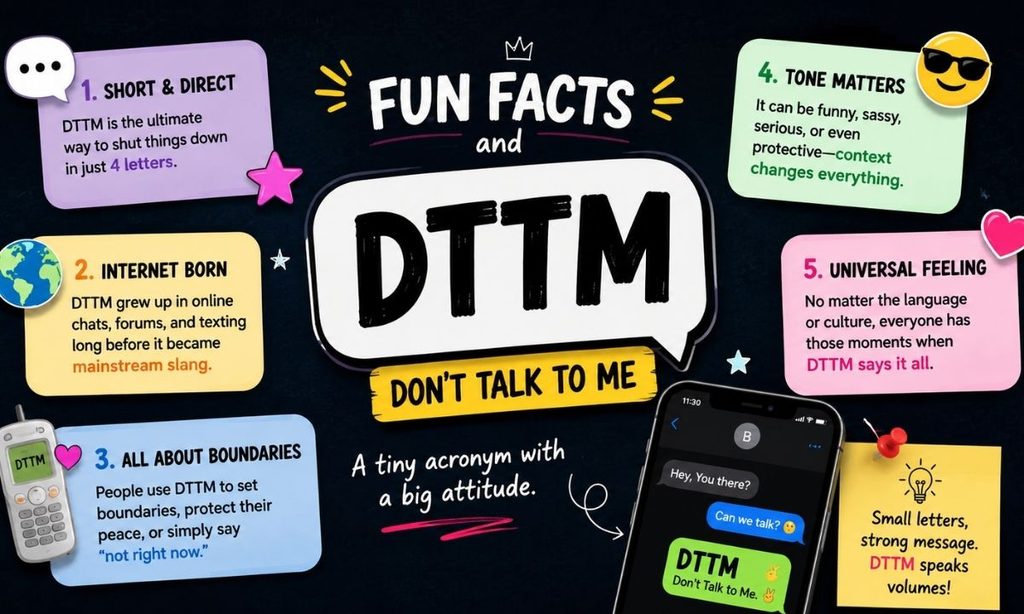
- DTTM followed the same shortcut logic as older abbreviations like LOL and BRB, just for a different phrase.
- It’s far less universally recognized than classics like LOL, so it can genuinely confuse people outside heavy texting culture.
- The same four letters carry completely unrelated meanings in casual chat versus IT systems, with almost zero overlap in context.
DTTM BioWiki Table
| Detail | Info |
| Most common meaning | Don’t Talk to Me |
| Category | Texting abbreviation / internet slang |
| Rare meanings | Don’t Think Too Much; Date-Time (technical) |
| Typical tone | Playful to mildly serious |
| Common platforms | Texting, Snapchat, Instagram, TikTok, WhatsApp, Discord |
| Opposite intent | “Hmu” / “talk to me” style openers |
| Formality level | Very informal, avoid in professional chats |
When to Skip DTTM and What to Say Instead
DTTM works well with close friends who already understand your texting style. It’s a poor choice in professional messages, with people who don’t use slang, or in serious conversations where clarity matters more than speed. In those cases, a direct alternative communicates the same need without risking confusion:
- “I need a bit of space right now, can we talk later?”
- “I’m not in the right headspace for this conversation.”
- “Can we pick this up another time?”
The Future of DTTM and Texting Slang
Like most internet slang, DTTM will likely keep evolving alongside whatever platform dominates next. It may fade as new abbreviations replace it, or it may stick around the way SMH and LOL have. Either way, its core function, a fast way to set a boundary without a long explanation, is unlikely to disappear even if the exact letters eventually change.
Wrapping It All Up
DTTM is short for “Don’t Talk to Me” in the vast majority of everyday texts, comments, and captions, and it’s usually more dramatic than literal. Tone, platform, and relationship context determine whether it’s a joke or a genuine request for space. Outside of casual chat, the same letters mean something entirely different in databases and IT systems, standing for Date-Time. Once you know which world you’re in, four letters stop being confusing.
Frequently Asked Questions
What does DTTM mean in a text from a friend?
It almost always means “Don’t Talk to Me,” usually as a playful or exaggerated reaction rather than a literal request.
Is DTTM rude?
Not inherently. It only reads as rude when sent coldly, without emojis or context, especially to someone unfamiliar with the phrase.
What does DTTM mean in databases or IT?
In technical settings, DTTM typically stands for Date-Time or Date-Time Marker, referring to a timestamp field.
How should I reply to a DTTM text?
Match the tone: joke back if it’s playful, or give space and follow up later if it seems genuine.
Is DTTM the same as DTM?
No. DTTM means “Don’t Talk to Me,” while DTM usually means “Don’t Text Me,” which is generally firmer and more final.


Pingback: JSP Meaning in Texting: Full Meaning, Examples, Uses & More